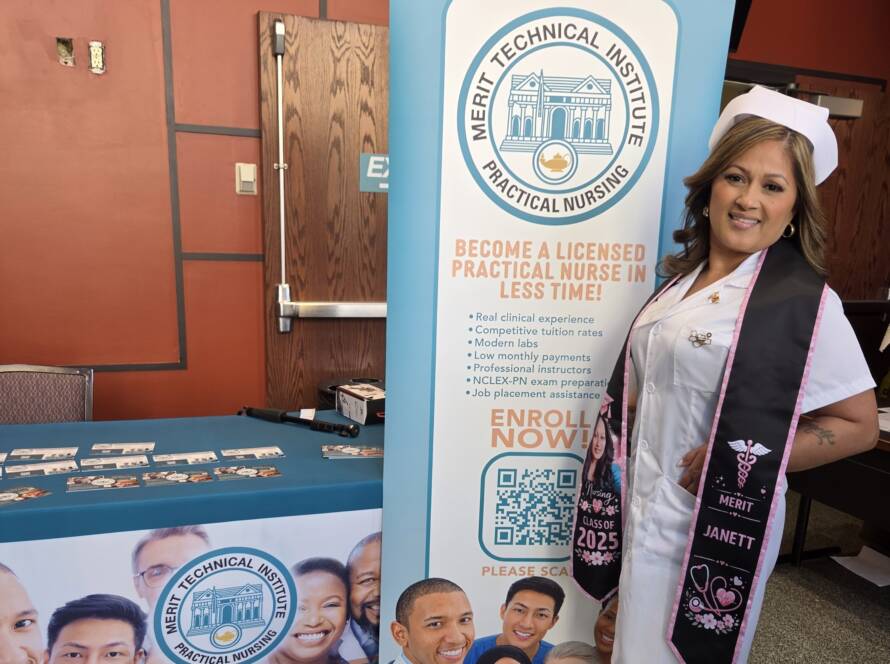
Orientation at Merit Technical Institute is more than the first date on a school calendar. It is the beginning of a relationship. You arrive with a goal: to become a licensed practical nurse. We welcome you with a commitment to take that goal—and the work required to reach it—seriously.
Some students come to orientation excited. Others are nervous about returning to school, balancing work and family, or learning subjects they have never studied before. Many feel all of those things at once. Wherever you are starting, you belong in the conversation. Ask questions, get to know your instructors and classmates, and leave with a clear picture of your next steps.
At Merit, we see ourselves as your partner throughout the program. Partnership means we provide instruction, guidance, and opportunities to ask for help. It also means you take an active role: attending, practicing, keeping track of your responsibilities, and telling us when you need support. We do not take the responsibility of supporting our LPN candidates lightly.
Start with a plan you can live with
One of the best things you can do during orientation is build a realistic weekly schedule. Add your classes, assignments, exams, clinical requirements, and tuition due dates to a calendar. Then add your work hours, travel, family commitments, and time to rest. Finally, reserve regular study periods.
Your plan does not have to look like anyone else’s. A focused 25-minute session may fit your life better than waiting for a free afternoon that never comes. Give each session a purpose: review a diagram, practice ten medical terms, or explain a body process without looking at your notes. Check your calendar every week and adjust it as the program moves forward.
Keep up with tuition dates and other program time frames as carefully as you track exams. If you see a problem approaching, speak with the appropriate Merit office early. We want students to understand their responsibilities and know where to bring questions.
Let us help you tackle anatomy and physiology
Anatomy and physiology is challenging for many nursing students. The amount of material is substantial, and knowing a term is only the beginning; you must also understand how the body works. In a study of nursing anatomy and physiology courses, Johnston et al. (2015) found that students benefited from opportunities to discuss difficult ideas and work repeatedly with diagrams, labeling activities, and flashcards.
You are not expected to master every system after hearing about it once. Review material throughout the week, draw and label structures, and try explaining a process in your own words. Close your notes and test what you remember; then check the gaps. Research in an introductory anatomy and physiology course examined the value of strategies such as spaced study and retrieval practice—returning to material over time and actively recalling it (Firetto et al., 2023).
Most importantly, do not struggle in silence. Bring your questions to class. Talk with your instructor and participate in tutoring when a topic first becomes difficult (Merit offers virtual tutoring too!). Asking for help early gives you more time to understand and practice before an exam. Supporting your learning is part of the work we are here to do together.
Build your nursing vocabulary a little each day
Medical terminology can feel unfamiliar at first. Start a set of memory cards with new terms, meanings, and word parts. Keep the cards small enough to review on a break or during your commute. Quiz yourself in both directions, and place the terms you miss back into your next study session.
Studying with classmates can help, too. A short Kahoot! quiz, when used in class or a study group, can make it easier to spot terms that need another review. Studies in nursing education have explored Kahoot! as an engaging way for students to check their knowledge. The goal is not to win a game; it is to learn from each answer.
Your smartphone can become part of this routine. Use its calendar for reminders, its timer to protect study periods, and digital memory cards for quick review. Record yourself with an explanation to replay later. Follow Merit’s recording rules, and never record patients or clinical encounters.
At orientation, you will hear about the work ahead. We hope you will also hear this: you are not expected to do it alone. Bring your commitment, your questions, and your willingness to practice. Merit will bring teaching, guidance, and support. Together, we can turn the excitement of your first day into steady progress toward your nursing goal.
References
Firetto, C. M., Starrett, E., Montalbano, A. C., Yan, L., Penkrot, T. A., Kingsbury, J. S., & Hyatt, J.-P. K. (2023). The impact of effective study strategy use in an introductory anatomy and physiology class. Frontiers in Education, 8, 1161772. https://doi.org/10.3389/feduc.2023.1161772
Johnston, A. N. B., Hamill, J., Barton, M. J., Baldwin, S., Percival, J., Williams-Pritchard, G., Salvage-Jones, J., & Todorovic, M. (2015). Student learning styles in anatomy and physiology courses: Meeting the needs of nursing students. Nurse Education in Practice, 15(6), 415–420. https://doi.org/10.1016/j.nepr.2015.05.001